-


Learn more about us:
When the environment gives us a headache: the impact of climate change
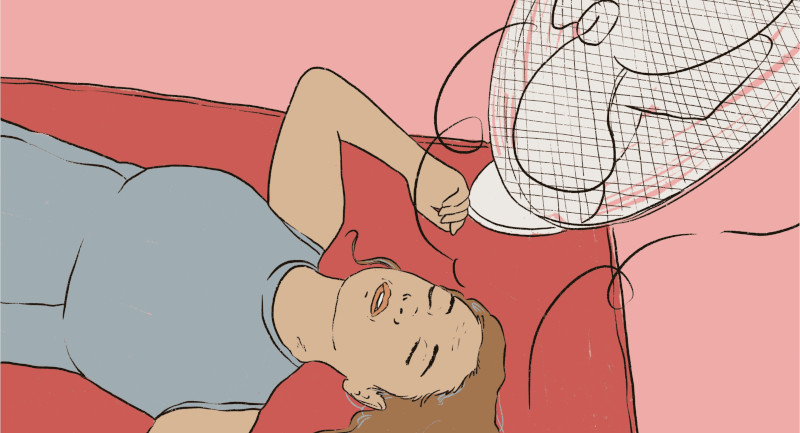
When the environment gives us a headache: the impact of climate change
Very hot weather can be hugely demanding for our body. In a previous article, we explored some of the ways heat can exacerbate headaches. But heat is only part of the story. When environmental factors occur together – air pollution, UV radiation, fine particulate matter and humidity – the effects can be devastating for people with headache disorders. And climate change is making everything worse. The heatwaves that swept across Europe in the summer of 2026 offered a stark reminder of how dramatically our living conditions could change as temperatures continue to rise. This has important implications for people living with headache disorders. In this article, we will take a closer look at some of the factors involved and the specific impact of climate change on people living with headache disorders.
Air pollution: a potential trigger
Air quality can make a real difference to people who suffer from headaches, particularly during the summer months. Over a ten-year period, an Israeli research team analysed data from more than 7,000 people with migraine. Using environmental monitoring data, they estimated how much the participants were exposed to air pollutants, including nitrogen dioxide (NO₂) and fine particulate matter. The aim of this study was to investigate and identify correlations between exposure to these pollutants and the risk of needing medical treatment for a migraine attack.
The results showed that the risk of migraine symptoms requiring medical treatment increased by about 40% when NO₂ levels were high. The researchers also found that nitrogen oxides had an even greater effect on migraine activity when hot weather coincided with low humidity. This finding was unsurprising, given that strong sunlight promotes chemical reactions that lead to the formation of additional air pollutants from nitrogen oxides. Higher levels of nitrogen oxides may also affect the way the trigeminal nerve interacts with blood vessels. Researchers have long suspected that this process stimulates the release of inflammatory substances that contribute to the development of migraine attacks. You can find out more about the role of the trigeminal nerve in this article.
And there is more to consider. Heat causes the body to lose substantial amounts of water, and intense sunlight exposes us to high levels of UV radiation. Together these factors can create a particularly harmful combination during the summer months, affecting those living with migraine as well as people who experience tension-type headaches. The authors of the study summarised their findings like this: people who are predisposed to migraine may be affected on two fronts. Prolonged periods of heat increase the overall risk of attacks, while rising levels of air pollution can trigger attacks directly.
Implications for Europe
The levels of air pollution measured in the Israeli study were similar to those regularly recorded in the EU. The findings could therefore be relevant to people living in Europe, too. Air pollution may increase the risk of migraine here as well, at least during the summer months. And the issue is becoming harder to ignore. Climate change is pushing summer temperatures higher across the European continent, increasing the likelihood of prolonged periods of extreme heat. The record temperatures reached during the European heatwaves in the summer of 2026 underline the need for similar studies in Europe. There is a clear need to investigate whether the presented findings are transferable to European populations.
Climate change is also worsening tension-type headaches
Research into the effects of environmental conditions on headaches has traditionally focused on migraine. This may be because of the high levels of suffering caused by the attacks themselves and the fear of when the next one might strike, prompting researchers to look for ways to prevent attacks and relieve symptoms. However, tension-type headaches have also attracted research interest, amidst growing evidence that they too can be triggered by environmental pollution and pollution from human activities. High levels of nitrogen oxides, fine particulate matter and UV radiation not only increase the risk of migraine attacks, but can contribute to tension-type headaches as well. Another important factor is heat stress, which occurs when, as a result of prolonged exposure to high temperatures, the body absorbs or generates more heat than it can get rid of.
As heatwaves become more severe, all these effects increase in intensity. And again, climate change is making matters worse. In recent years, both peak temperatures and the length of heatwaves have risen almost continuously, with a knock-on effect on tension-type headaches.
Wildfires cause more headaches
This summer, the link between fine particulate air pollution and headache disorders was also brought into sharp, and tragic, focus. As reported in the Ärzteblatt and elsewhere, extensive wildfires in the Canadian provinces of Alberta and Ontario led to a significant increase in emergency department visits for migraine and tension-type headache. A research team in Ottawa found that migraine accounted for 86% of these emergency visits. The remaining 14% were due to tension-type headache. The researchers also found that particles released by the wildfires were the sole factor responsible for the increase in headache symptoms. Germany's Federal Environment Agency considers particulate matter from wildfires to be more harmful to health than the particles typically encountered in large cities. This means that environmental disasters of this kind are not just an immediate threat to the safety of the local population. For people with headache disorders, the aftereffects can bring further suffering, even after the emergency has passed.
What can be done?
Thankfully, action is being taken at the highest level to address these issues. The World Health Organization (WHO) has updated its air quality guidelines. For fine particulate matter measuring up to 2.5 micrometres in diameter (PM₂.₅), it recommends an annual average concentration of 5 micrograms per cubic metre of air as a guideline for long-term exposure. The EU is set to incorporate these guidelines, which will have to be transposed into national law by the end of 2026. European legislation is also introducing stricter limits for nitrous oxides, with effect from 2030. These measures are an important step towards cleaner air and could help reduce the health risks associated with pollution.
There are also steps we can take to protect ourselves. If you want to reduce your personal risk levels during periods of intense summer heat, you should limit the time you spend outdoors in these conditions. Where possible, avoid areas with heavy traffic altogether, as vehicle emissions contribute to air pollution. Essentially, the aim is to avoid putting unnecessary strain on your respiratory system, sensory organs and nervous system. Every single particle of fine particulate matter and every trace of nitrogen oxide that you avoid inhaling reduces your exposure to air pollution and may help lower your risk of headaches. For more general support with headache prevention, we also recommend our Prevent Headache app. It provides evidence-based guidance all year round, helping you to keep on track with your headache prevention whatever the season, not just in summer.
Published in October 2026
-
References
read
Akgun, N.; Aciman Demirel, E.; Acikgoz, M.; Celebi, U.; Kokturk, F.; Atasoy, H.T. The Effect of Weather Variables on the Severity, Duration, and Frequency of Headache Attacks in the Cases of Episodic Migraine and Episodic Tension-Type Headache. Turk. J. Med. Sci. 2021, 51, 1406–1412. Dales R, Paul N, Cleland SE, Lavigne E, Rouleau M, Evans J, Ferro A, Kunarac K, Owen J, Cakmak S. Wildfire-Sourced PM2.5 and Emergency Department Visits for Migraine and Other Primary Headache. JAMA Netw Open. 2026 Jul 1;9(7):e2625015. doi: 10.1001/jamanetworkopen.2026.25015. PMID: 42496976; PMCID: PMC13401198. Elser H, Kruse CFG, Schwartz BS, Casey JA. The Environment and Headache: a Narrative Review. Curr Environ Health Rep. 2024 Jun;11(2):184-203. doi: 10.1007/s40572-024-00449-4. Epub 2024 Apr 20. PMID: 38642284. Kushner P, Kalita P, Revel FB, Oliver C, Nangineedi M, Cardosa M. Climate Change and Air Pollution-Related Health Effects on Pain. Int J Environ Res Public Health. 2025 Nov 14;22(11):1721. doi: 10.3390/ijerph22111721. PMID: 41302667; PMCID: PMC12652110. Li S, Liu Q, Ma M, Fang J, He L. Association between weather conditions and migraine: a systematic review and meta-analysis. J Neurol. 2025 Apr 17;272(5):346. doi: 10.1007/s00415-025-13078-0. PMID: 40246758. Peles I, Novack L, Gordon M, Sarov B, Novack V, Ifergane G. Acute Environmental Triggers and Intermediate-Term Modulators of Emergency Migraine-Related Health Care Encounters. Neurology. 2026 May 12;106(9):e214936. doi: 10.1212/WNL.0000000000214936. Epub 2026 Apr 15. PMID: 41985109; PMCID: PMC13089202. https://www.aerzteblatt.de/news/migrane-wie-wetter-und-luftschadstoffe-anfalle-triggern-7f0b0476-bc24-41e9-a8ee-c2dd2da84b79 Accessed 26-Sep-2026 https://sigmaearth.com/de/study-finds-air-pollution-may-increase-migraine-attacks/ Accessed 20-Sep-2026 https://www.aerzteblatt.de/news/durch-waldbrande-verursachte-feinstaubpartikel-konnen-schwere-kopfschmerzepisoden-auslosen-7dc6a7c5-4859-485f-9ebd-b3739bd928f6utm_medium=email&utm_source=CR&utm_campaign=NL-DAE_FG-Neurologie&utm_content=Mailing_20260901 Accessed 12-Sep-2026 https://www.sciencemediacenter.de/angebote/aktualisierte-who-leitlinie-zur-luftqualitaet-21124 Accessed 09-Sep-2026 https://www.umweltbundesamt.de/themen/gesundheit/umwelteinfluesse-auf-den-menschen/besondere-belastungssituationen/luft-gesundheitsbelastung-durch-waldbraende#was-ist-ber-langzeitfolgen-evtl-auch-durch-wiederholte-waldbrnde-in-bestimmten-regionen-bekannt Accessed 09-Sep-2026close
EVEN MORE:
LATEST
ARTICLES
KEEPING UP
WITH THE SCIENCE

Migraine and depression: do they have common causes?


Waste in the brain? Why the brain needs “cleaning”

Stress and Headaches: What Can You Do?


"Migraine diet"? All about energy deficits and the role of bedtime snacks

"When will the next attack come?" Attack anxiety in people with migraine.


Shift work and headache: a new perspective

Sleep and Headaches: New Insights from Research


Migraine & our sense of smell - more about an astonishing connection

Tension headaches: what causes them?


Presenteeism: taking your headache to work

Headaches and the weather: What does the latest research say?


Covid passes, the headache stays


Uni without headaches – this is how it’s done

Summer is calling! How you can make holidays truly restful


Migraine and evolution: why do the ‘migraine genes’ defy selection?

The Gender Pain Gap: the pain perception of men and women


What came first? On sleeping problems and tension-type headache


“Why am I so stressed?” – fighting headaches with resilience


MIGRAINE AND HEADACHE IN ADULTS – A GLOBAL CHALLENGE

Relaxation – an integral part of headache prevention


Water = the best medicine for headache? Maybe not. But it’s pretty good.


Give yourself a break – on university stress and headaches

Your internal clock: sleep-wake rhythm and headaches


Migraine and light: when brightness hurts

Migraine and menstruation: what’s the story?

Digital detox – just another wellness fad?

Migraine on the beach: holiday headaches explained

What your smartphone does to your head and neck


The winter blues increase your headache risk

Noise: an underestimated risk factor in headache and migraine


Headache and coffee: what the research says


Teeth grinding and headache – chicken or egg?


